Every week we do the same small disaster, we shop with reusable bags, we load the trunk. Then we take a corner, hit a speed bump, or brake for a yellow light, and hear a jar roll and a carton of eggs meet the floor.
The bags are not the problem. Reusable totes beat single-use plastic. The problem is that a bag is soft, top-heavy, and free to slide. In an empty SUV cargo area, it has all the structure of a puddle.
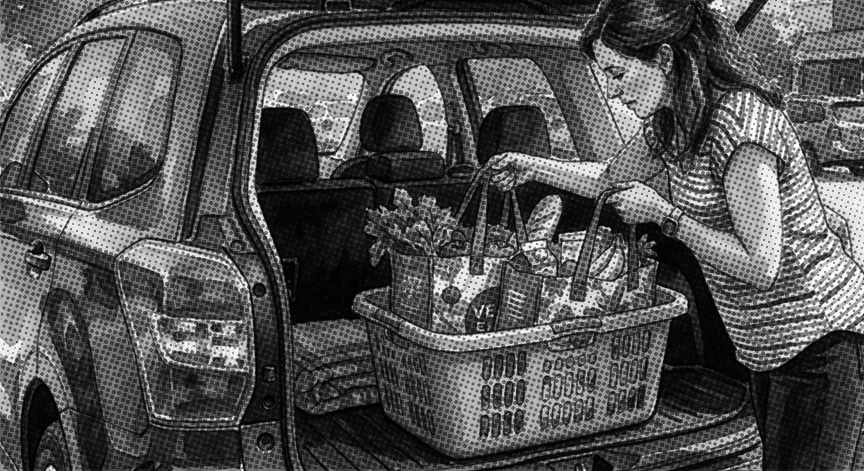
The fix is almost embarrassingly simple: pack the reusable bags as usual, then set those bags inside a large square laundry basket in the trunk. Load the basket > Drive home > Lift the basket > Carry it inside > Unpack.
Why a basket beats a “better” bag
A laundry basket does three jobs the bags cannot do for themselves.
It walls them in. Square or rectangular baskets match the floor of a cargo area. Bags lean on rigid sides instead of on each other until the tallest one tips. Produce stays upright. Glass stays glass.
It turns many items into one lift. Offloading is the hidden tax of grocery shopping. You make four or five trips because each bag has a different weight and a different talent for dumping oranges in the driveway. A loaded basket is one unit. You can store up to 3 reusable bags per large basket. You still move a contained load instead of a parade of collapsing totes.
It keeps the trunk honest. Loose bags migrate under seats and into the space you need for a stroller or gym bag. A basket has a footprint. You know where the groceries live. When you are done, the basket goes back to laundry or stays in the vehicle as cheap cargo furniture. You do not need a specialty trunk organizer.
This is a system, not a product
Most households already own both parts. Reusable bags showed up after plastic-bag fees. Laundry baskets showed up because clothes also refuse to stay in a pile. Combining them costs nothing if you have both, and very little if you need one sturdy square basket from the hardware aisle.
That matters. A broken jar is a ruined bag, a sticky liner, and a second trip. Containment is cheaper than replacement. It is also easier on your back. Repeated one-bag trips are fine if you are young, unhurried, and parked at the door. They are less fine with a toddler, ice on the walk, or a building with no elevator.
The objections are real. They are also small.
Yes, an empty basket takes space. Park it against a wall of the cargo area, or take it inside.
Yes, a very full basket can be heavy. Do not treat it as a dare. Split the load.
Yes, some trunks are weirdly shaped. Choose a basket that sits flat. Skip the floppy hamper. Rigid plastic or a heavy woven square basket is the point. Round hampers waste corners. Soft bags inside a soft hamper solve nothing.
And no, this does not require a brand, an app, or a $40 trunk shelf. The best household inventions are remixes of things that already work.
A less chaotic trunk. We have spent years arguing about bags: paper, plastic, cotton, recycled whatever. Fine. But that argument skips the last three feet of the trip: the ride home.
If reusable bags are going to succeed, they have to survive a left turn. A bag that spills is a bag people resent. A system that does not spill is a system people keep.
So: keep the reusable bags. Stop asking them to be crates. Give them a crate. Put the crate in the trunk. Drive like someone who would rather not mop pasta sauce out of a cargo liner on a Sunday.
##