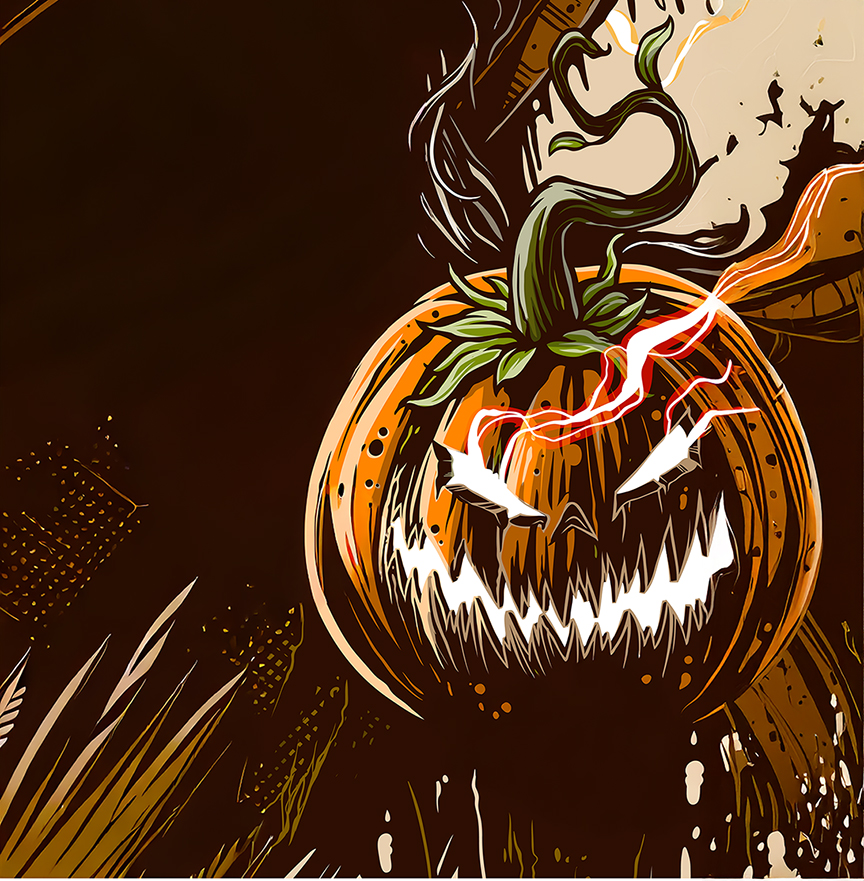
Updated retelling: The Vigil of the Calabash Saint.
The entity is now called the Calabash Saint (sometimes whispered as “Old Calabaza” or “the Hollow Gourd”).
The Territorial Spirit
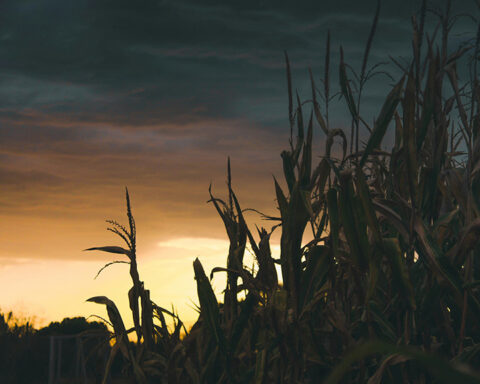
“Calabash” evokes the gourd/pumpkin family in an older, almost biblical-sounding way—hollowed-out vessels that can hold either sustenance or damnation. It manifests as a colossal figure woven from living cornstalks, dried vines, and blackened husks, crowned with a massive, ever-shifting calabash gourd for a head. The gourd’s carved face glows with foxfire and blood-light; its expression changes from mocking sorrow to holy wrath. In one hand it carries a scythe made of fused farm tools and bone. At its core pulses a living calabash seed-pod that contains a fragment of the land’s ancient, betrayed spirit.
The town has performed the Night of the Thorned Run for 77 years. This All Hallows’ Eve will be the last one—by design.
The Harvesters’ Confraternity (the secret council of priests and mystics) has already chosen this year’s “October Sacrifice”: Pete McCormick, an 18-year-old initiate who has always been unnaturally gifted at discernment of spirits. What they don’t know is that Pete has spent the last year secretly studying forbidden texts—smuggled Jesuit journals, suppressed indigenous oral records, and a half-burned 19th-century grimoire written by the town’s founding missionary. He has pieced together the true nature of the Calabash Saint and discovered a hidden ritual that can sever the pact once and for all.
Pete’s plan is dangerous and heretical: instead of trying to kill the Calabash Saint, he intends to offer himself willingly as a true, unforced sacrifice—not the coerced blood the spirit has been fed for decades, but a conscious act of reparation. By doing so at the exact moment the Saint reaches the desecrated altar inside the old stone church, he believes he can fulfill the original debt, acknowledge the land’s violated sovereignty, and release both the town and the spirit from their mutual curse.
Updated Ritual & Characters
- The young mystics are still released after five days of fasting, scourging, and prayer. They carry the same blessed weapons (stigmata daggers, salt-and-relic shotguns, rosary flails).
- This year, however, the elders are unusually tense. They know the land itself is growing restless; the corn is taller and more aggressive than ever, and strange lights have been seen moving between the stalks for weeks.
- Pete’s closest friend (and secret romantic interest), Tori, has smuggled him a final relic: a fragment of the original treaty stone that was broken when the town was founded. She refuses to stay locked indoors and will play a crucial role in the climax.
- The most fanatical elder, Father Shepard (Pete’s own godfather), is determined that the ritual must continue unchanged. He views Pete’s discovered “way out” as demonic temptation.
The Last Night
At dusk the boys are released. The Calabash Saint rises from the fields, larger and more coherent than in previous years, as if it senses the possibility of true freedom. It no longer rampages blindly; it moves with terrible purpose toward the church, sparing or even protecting those who show genuine remorse or listen to its wind-carried accusations.
Pete fights his way through the chaos—not to slay the Saint, but to reach the church first. Along the way he loses most of the other boys, some to the Saint’s wrath, some to the elders’ hidden snipers who are trying to force the old pattern.
Inside the church, on the blood-stained altar built over the desecrated burial ground, Pete confronts Father Shepard. A brutal, theological duel ensues—shotgun blasts mixed with exorcism prayers and desperate arguments about justice versus tradition.
As the Calabash Saint smashes through the doors at the stroke of midnight, Pete kneels willingly before it. He offers the broken treaty stone and his own life—not as a victim, but as an act of restitution. The Saint’s glowing gourd-face lowers until its carved eyes meet Pete’s. For one frozen moment the church is filled with the scent of fresh earth and smoke instead of blood.
The final act is Pete driving his own stigmata dagger into his heart while reciting a newly reconstructed rite that blends Latin, English, and fragments of the old native tongue. The Calabash Saint accepts the offering. Its massive form collapses into a storm of leaves, husks, and glowing seeds that swirl upward like reversed rain.
Resolution
And so the curse breaks.
The surviving townspeople wake on November 1st to find the endless cornfields have begun to wither naturally. Roads no longer loop. Phones work. The oppressive weight that has pressed on every soul for generations is gone.
Pete does not die in the conventional sense. His body vanishes, and some claim they still see a new, gentler spirit walking the fields at dusk—a Calabash Saint redeemed, now acting as protector rather than judge.
The town is free to leave or stay and begin genuine healing. Many do both. The Order of the Thorned Saint disbands in confusion and quiet shame. A few, including Tori, choose to remain as caretakers of the newly hallowed ground.
The cycle is ended and the land gives its forgiveness.
##